A Quiet Room of One's Own: Boston's Affordable Rehearsal Spaces, Mapped
When the bedroom shares a wall with a sibling's Zoom class, a parent's work call, or a roommate's nap schedule, practice can feel like a negotiation. Boston students are lucky: the city has libraries, community centers, church halls, music stores, and school programs that offer free or low-cost rehearsal space. The catch is that none of these rooms is a secret all-access pass. Policies vary by branch, season, and staff. The goal is to find one reliable room and build a routine around it.
Start with the public library—yes, really
The Boston Public Library system is not a conservatory, but many branches have meeting rooms and study rooms that can be reserved by cardholders. Some are free; some require a small fee or a staff-approved reservation. A small keyboard with headphones, an acoustic guitar, or a quiet singer can often work in a study room. A drum kit usually will not. Call the branch or check the online room-reservation page before you haul gear across town. Ask about time limits, whether the room is truly soundproof, and whether amplification is allowed. Bring headphones, a mute, and a sense of proportion. The library is a shared space, not your basement.
Community centers and teen spaces
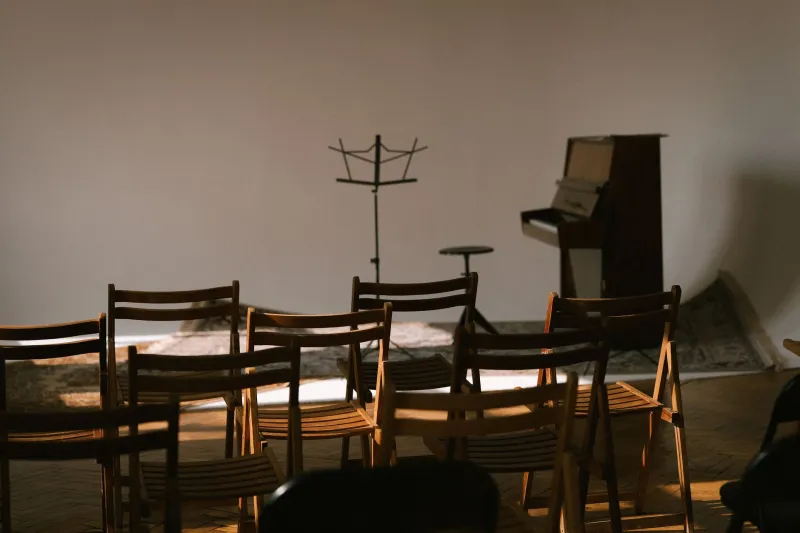
Boston Centers for Youth & Families runs neighborhood centers with rooms that sometimes open up for music practice, classes, and teen programs. Rates and rules vary. A resident rate may be lower; a nonprofit or youth rate may be lower still. Ask about after-school hours, adult supervision, and whether a piano is in tune. Some centers have an upright piano in a multipurpose room; others have nothing but chairs and a folding table. Bring your own stand, music, and cables. If you are a minor, confirm the center's supervision policy before you book. A cheap room is not cheap if a parent has to sit in the lobby for two hours.
Church halls, music schools, and store back rooms
Many Boston churches rent fellowship halls and choir rooms by the hour, especially on weekday evenings. Community music schools and some music stores also rent practice rooms during off-peak hours. These rooms often have a real piano, which is a huge advantage for pianists and singers. Ask about tuning, insurance, cancellation policies, and whether the room is shared with other activities. A church hall may be quiet on Tuesday and full of scouts on Wednesday. Confirm the exact room, the access code, and who to call if the door is locked. Off-peak rates are usually the friendliest; a 3 p.m. slot may cost less than a 7 p.m. slot.
School-access and partner programs
Some Boston Public Schools and community partners open music rooms after school for students enrolled in a program. These are not usually public rentals. Ask your school's music teacher, guidance counselor, or after-school coordinator whether there is a supervised rehearsal option. Teen centers and youth arts programs may also have drop-in hours. The trade-off is scheduling: school rooms follow the school calendar, and they may close during vacations. Still, a free room with a trusted adult nearby can be the most reliable option for a middle or high school student.
How to book without a headache
Call or email with a short script: your name, the student's age, the instrument, how many people are rehearsing, the dates and times you need, and any equipment requirements. Ask directly about cost, supervision, insurance, cancellation, access, and noise rules. Then ask for the confirmation in writing. If you are booking for a minor, ask who is responsible for supervision and whether a background-checked staff member will be present. Do not assume that a low rental fee includes a piano, a music stand, or a power strip.
Etiquette that gets you invited back
Arrive five minutes early, not twenty. Leave on time. Use headphones if you are playing an electric instrument. Keep the volume below conversation level unless the room is designed for amplification. Do not eat in the room. Reset the chairs and stands. Do not touch a house piano without permission, and never put a drink on it. If you are a minor, follow the supervision rules exactly. Cancel as early as you can if you cannot make it. A reliable student who leaves the room clean will get the next booking.
What to pack
Bring your instrument, music stand, music, tuner, metronome, headphones, cables, adapters, and a small extension cord. A practice pad is useful for drummers who cannot bring a kit. A portable keyboard with headphones can turn a quiet study room into a workable practice space. Bring water, a notebook, and a pencil. Label everything. If you are rehearsing with others, bring a shared set list and a backup plan for a missing cable or a dead outlet.
Build a weekly routine
The best room is the one you can actually get to every week. Pick a consistent slot, add a transit buffer, and put it on the family calendar. Find a backup space for snow days and school vacations. If two students share a rehearsal, use a buddy system for travel and supervision. Budget for the room the same way you budget for lessons. A reliable Tuesday at 6 p.m. in a community center beats a mythical free studio that is always booked. In Boston, the room is out there. You just have to ask the right questions, bring the right gear, and treat the space like someone else's home—because it is.