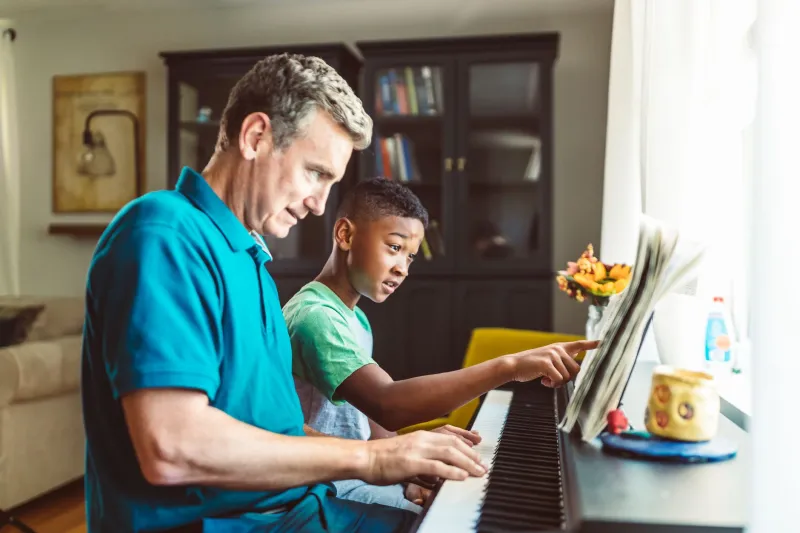
First Set, Small Room: Boston Open Mics and Teen Showcases That Build Real Stage Confidence

There is a specific kind of quiet before a first open mic. The room is smaller than expected. The microphone feels too close. The guitar strap seems to have forgotten how shoulders work. Then someone in the back nods, the first chord lands, and the quiet turns into something useful: attention.
That is the value of a low-stakes stage. Formal lessons build technique, repertoire, and discipline. Open mics and teen showcases build a different set of muscles — stage presence, recovery, listening, and the simple proof that a mistake does not end the song. In and around Boston, there are plenty of rooms that welcome beginners, as long as performers and parents know what they are walking into.
Why the small stage matters
A weekly lesson is a private conversation between student and teacher. A performance is a public one. Even a five-minute set at a cafe or library forces a musician to make decisions: how to start, how to introduce a song, how to keep going when a lyric disappears, and how to say thank you when it is over.
For young musicians, that experience can be more motivating than a practice chart. For adults returning to an instrument, it can be the reason to finally learn three songs all the way through. The stage does not need to be prestigious. It needs to be supportive.
Rooms around Boston that tend to be welcoming
Schedules and age policies change, so always check the current calendar and call ahead. With that caveat, these are the kinds of rooms worth watching.
- Cambridge and Somerville listening rooms. Acoustic-friendly cafes and listening rooms in these neighborhoods have long hosted open mics and songwriter nights. Some are all-ages; others are 21-plus, so confirm before you bring a teen.
- Boston neighborhood community centers. Centers in Jamaica Plain, Allston, Dorchester, Roxbury, and Brighton sometimes run teen open mics, talent nights, and all-ages showcases. These tend to be lower-pressure and more family-friendly than bar open mics.
- Library teen programs. Boston Public Library branches and suburban library systems occasionally host teen music nights, poetry-and-song events, and small showcases. They are often free and explicitly designed for first-timers.
- Youth arts organizations and after-school programs. Community arts groups and youth development programs may run performance nights that are closed to the public or lightly attended. Those can be ideal first rooms.
- All-ages cafe shows and farmers market stages. Outdoor and daytime slots can be less intimidating than a darkened club. A farmers market set or a community festival is a real performance with a forgiving audience.
How to find the right room
Not every open mic is a good fit for a beginner. A room that advertises a listening audience is different from a bar with a television and a loud crowd. Before you go, ask a few practical questions.
- Is it all-ages, and does a parent or guardian need to stay?
- Is sign-up in advance or at the door, and how many slots are available?
- What is the time limit per performer — one song, two songs, five minutes?
- Is there a house instrument, backline, or sound system, or should performers bring everything?
- Is the room set up for listening, or is music background noise?
- What is the neighborhood and transit situation, especially for an evening set?
For teens, the parent question is not just about transportation. It is about supervision, audience, and whether the room’s vibe matches the musician’s experience level. A supportive cafe at 6 p.m. may be perfect. A loud club at 10 p.m. may not be, even if the sign-up sheet is open.
First-timer etiquette and gear
Open mics run on goodwill and time limits. The musicians who get invited back are usually the ones who are easy to work with.
- Sign up early and stay for at least a few other performers. The audience is a community, not a service.
- Keep the set short. Two songs is usually plenty for a first time.
- Tune before you go on stage, not during your introduction.
- Know your first chord and your first line. The rest can be recovered.
- Bring your own instrument, cable, capo, picks, and a backup plan. Do not assume the house has what you need.
- Label your gear. Small rooms swallow cables and tuners.
- Be kind to the sound person. They are often volunteering or working solo.
- If you use a backing track, cue it up before you walk to the mic.
A parent’s checklist for the first showcase
Parents can make a first performance feel safe without making it feel like a recital. Confirm the age policy and whether guardians must stay. Bring earplugs for loud rooms. Keep the audience small if your child is nervous. Agree on a signal for wanting to leave early. And afterward, resist the urge to review every note. Ask what felt good, what felt shaky, and whether they want to do it again.
The goal is not a flawless first set. The goal is a second one.
What to do after the set
A phone video is enough. Watch it once, note one thing that worked and one thing to adjust, then put it away. The next step might be another open mic, a teacher’s studio class, or a school talent show. The important thing is that the stage stops feeling like a test and starts feeling like part of the learning loop.
Boston’s music scene can look intimidating from the outside, but its small rooms are often the most generous. A first set in a cafe, library, or community center is not a lesser version of a real show. It is the real thing, at the right size.